Author: travelchinaguide.com
From: China
Views: 3802
Uploaded: Oct 29, 2014 09:24
Sorry, only one vote is allowed for each video.
4
Share
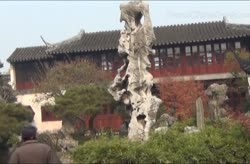
It was formally called Haiyong (Surging Sea) Hill. According to Shi Ji written by Sima Qian who was a well-known historian of the Western Han Dynasty (202 BC - 9 AD), Fu Chai, the king of the Wu State of the Spring and Autumn Period (770 – 476 BC), was buried here. Legend has it that a white tiger appeared on the hill on the third day after Fu Chai was buried. Since then, it has acquired its name Tiger Hill.