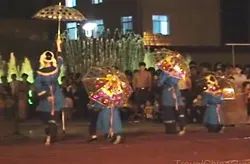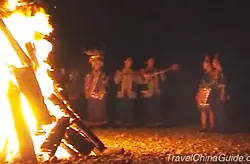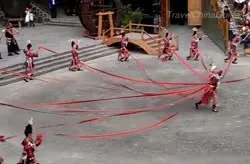
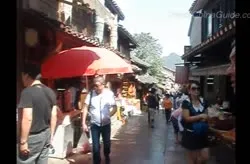
Folk Performances in Xijiang Qianhu Miao Village - Part 1
Emperor Guangwu of the Eastern Han Dynasty (25 - 220 AD) sent troops to quell the rebellion in Wulingman (referring to the western part of Hunan Province) in 47 AD, which forced Miao people there to leave their homes. During their migration, Miao people were divided into several clans. After experiencing many hardships, one of the clans called Xi moved to an area in Guizhou. However, they found that there was already another clan called Shang.
Therefore, Xi clan begged a part of land from Shang clan and named it as Xijiang. Xi refers to Xi clan. Jiang is an interchangeable word, which is the same as Tao that means “beg from”.

4377

3
Xijiang Qianhu Miao Village
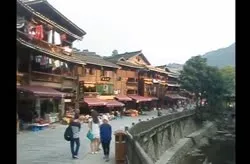
Composed of around 10 stockades built on the hills, Xijiang Miao Village is regarded as the largest settlement for Miao people in China.

4284

4
Qingyan Ancient Town
Built in 1378, this town has a history of more than six hundred years. At first, it was a military outpost led by Ban Lingui who controlled 72 stockaded villages.
Today, it has become a popular tourist destination. With an area of 741 acres, this town has nearly 100 cultural relic sites, such as Wenchang Pavilion, Ciyun Temple and Wanshou (Longevity) Palace.

3021

3